Drakkin
Contents
Overview
The drakkin were Seeded by Lythaelos, Dragon-God of Fate and Time, to serve as the watchers of the skein of history. Designed to embody wisdom and foresight, drakkin are biologically immortal, and some drakkin are even blessed with the Gift of Longsight, enabling them to perceive the flow of time and maintain the perspective of eternity. These gifts make them natural guardians of knowledge and history, and they were long trusted with the relationships between the First Guardians and mortal races in the past of Emaxus.
Drakkin are deeply tied to the First Guardians in both spirit and magic, leading to fierce debate about whether they are First Children (like humans) or First Guardians (like dragons, giants, and leviathans). Those who remember Etrinrilla, the ancient civilization of giants and drakkin Dragonlords, believe drakkin were created to bridge this divide—unifying mortals and Guardians through their shared heritage.
The first drakkin were placed on the northern shores of Yalrin in the Etrini Desert, where they established themselves as protectors of ancient knowledge. While most remain concentrated in Yalrin, smaller populations have spread across Emaxus, long-threaded remnants from the ancient conquests of Etrinrilla. Their largest population center outside Yalrin is Drakkina, a city built in the heart of the Sea of Sand in northern Iotura. Drakkin favor deserts and dry regions, often building their homes in spires or cliffs that reflect their aerial nature.
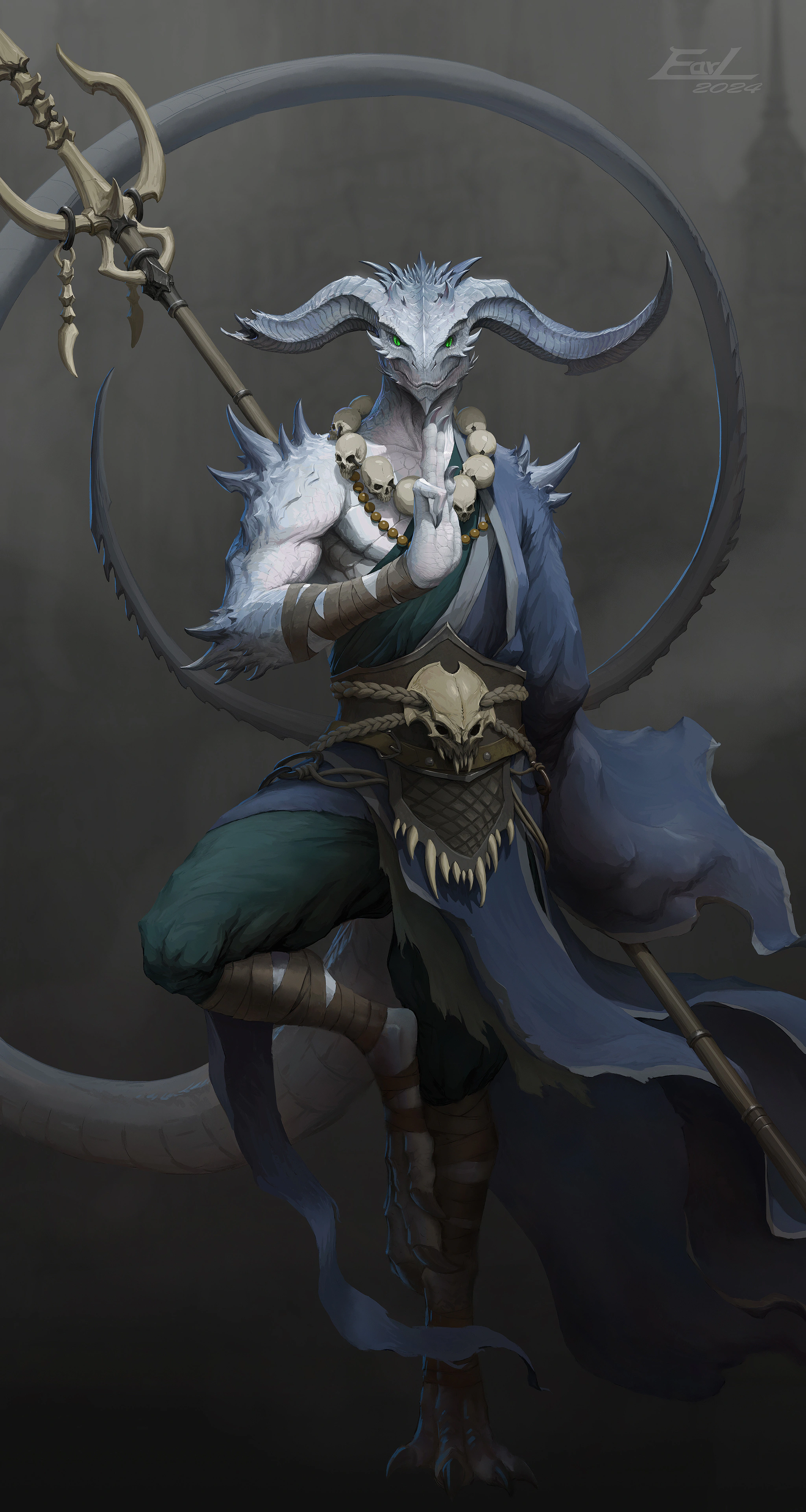
Appearance
Drakkin are humanoid but bear striking features that reflect their Guardian connection:
Height: Between 5.5 and 7 feet tall, with lean yet muscular builds.
Scales: The color tones of their scaled skin range in color from shimmering golds and silvers to deep reds or blues. Some drakkin have faint markings that glow softly when exposed to Guardian relics.
Eyes: Their eyes are sharp and reflective, resembling gemstones or polished metal—often glowing faintly when they use magic or perceive time’s flow.
Horns: Most drakkin have regal crests of horns and spines along their heads and chins, which tend to grow more complex and refined as they age.
Drakkin are hermaphroditic, with no biological sexes or concepts of gender. Their reproduction involves gamete exchange on egg clutches rather than traditional sexual differentiation.
